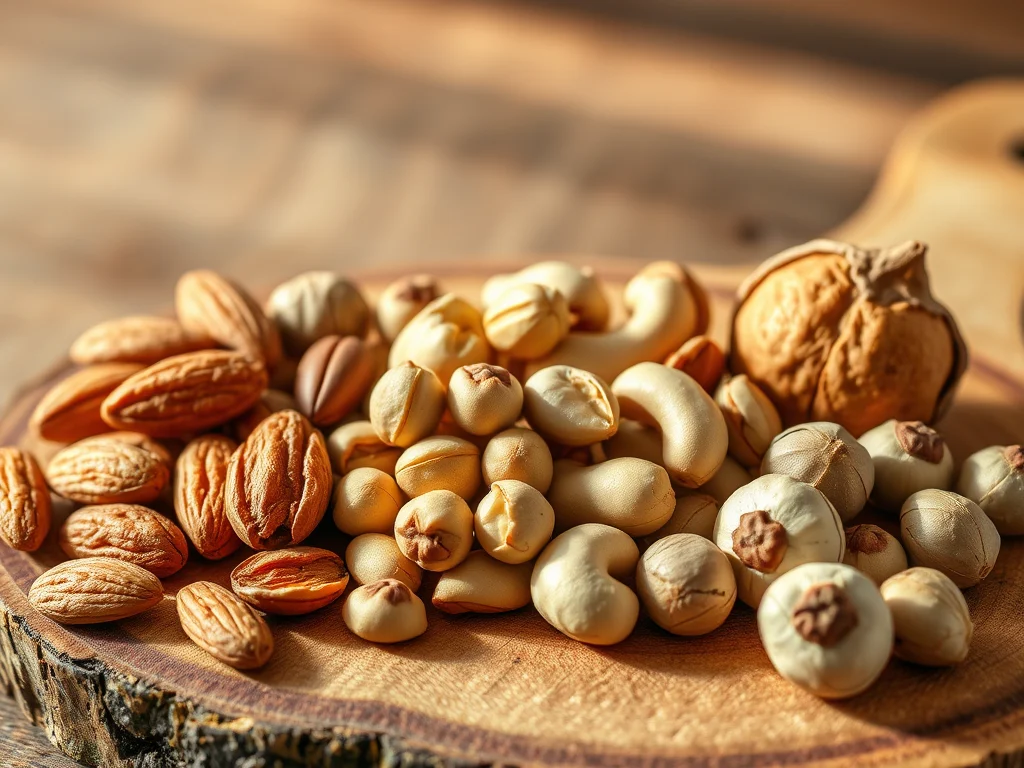
Top 5 Healthy Nuts for Snacking: Nutrition & Benefits
In today’s post, we’ll explore the world of healthy snacking and best nuts for health. We’ll closely look at the five most nutritious nuts for snacks.. These powerhouse foods are beloved for their delightful taste. They have a crunchy texture. They are also treasured for their rich heritage and impressive wellness benefits. If you’re seeking the perfect portable snack, the right nuts can make a significant difference. You can also enhance your daily routine with more wholesome nutrition using nuts.
In this guide, you’ll learn:
- The unique flavor profiles of each top nut
- Fascinating historical background and global significance
- Detailed, bulleted nutritional information
- The latest science-backed health benefits
- How to enjoy these nuts for optimal wellness
- The best nuts for health
- The best nuts for healthy snacking
Skip Ahead to Your Favorite Nut
Why Nuts Are Essential for Healthy Snacking
Nuts have earned a reputation as one of the smartest snacks for those focused on wellness and nutrition. They are packed with plant-based protein, healthy fats, fiber, vitamins, and minerals. Unlike many processed snacks, nuts keep you feeling full and energized without added sugars or artificial ingredients. Regular nut consumption is linked with a reduced risk of heart disease, improved cholesterol, and enhanced brain operation.
Moreover, these nuts make wellness accessible anywhere—at work, during travel, or after a workout. Their natural shelf-stability and versatility are impressive. You can enjoy them on their own. Try them in trail mixes. They are also perfect as a crunchy addition to yogurt and salads. Even alone, these are heart-healthy nut snacks.
1. Almonds
Flavor Profile
Almonds offer a light, crisp taste with a subtle sweetness and a hint of creaminess. Their flavor is mild and versatile. This makes them ideal as a standalone snack. They can be paired with both savory and sweet recipes. When roasted, their nutty profile becomes more pronounced, while raw almonds keep a delicate, almost buttery essence. The crunch of almonds is satisfying, often described as “crisp” rather than hard.
Historical Background
Almonds have an ancient and diverse history. They are native to the Middle East and South Asia. They have spread across the globe through trade routes and cultural exchange. Archaeological findings show evidence of almond consumption dating back to the Early Bronze Age around 3500 BC. Almonds are found in religious texts and mythologies. They are mentioned in the Bible and Greek legends. In these contexts, they symbolize hope, love, and renewal. The name “almond” is rooted in multiple ancient languages, reflecting its widespread importance throughout human civilization.
California now leads global almond production. It supplies about 80% of the world’s almonds. Distinct regional varieties bring unique taste and texture, like the Nonpareil’s sweetness or the Mission’s earthy undertones.
Nutritional Information (Per 1 oz / 28g Serving)
- Calories: 164
- Protein: 6g
- Total fat: 14g (includes 9g monounsaturated)
- Carbohydrates: 6.1g
- Fiber: 3.5g
- Sugar: 1.2g
- Vitamin E: 7.3mg (49% DV)
- Magnesium: 76.5mg (18% DV)
- Manganese: 0.6mg (26% DV)
- Copper: 0.3mg (33% DV)
- Riboflavin: 0.3mg (23% DV)
- Calcium: 76mg (6% DV)
- Potassium: 208mg (4% DV)
Health Benefits
- Heart Health: Almonds contain healthy monounsaturated fats and vitamin E. These nutrients help reduce LDL (“bad”) cholesterol. They also lower the risk of heart disease.
- Blood Sugar Control: Their combination of protein, fiber, and healthy fats slows digestion and prevents blood sugar spikes.
- Antioxidant Protection: Almonds are loaded with antioxidants, especially in the brown skin, which combat oxidative stress and inflammation.
- Weight Management: Due to their satiating effect, almonds support healthy weight goals.
- Bone Strength: They deliver a decent amount of calcium and magnesium, essential for maintaining strong bones.
- Brain Function: Magnesium, vitamin E, and riboflavin in almonds contribute to improved memory and cognitive performance.
Try this: Toss sliced almonds onto a salad or use almond butter as a dip for apple slices.
2. Walnuts
Flavor Profile
Walnuts have a rich, earthy flavor with a slight bitterness, especially if the skins are left on. Notes of butteriness and mild tang come through, while their texture is both crunchy and creamy. The intricate taste is shaped by their polyunsaturated fat content. Mild tannins in the skin also contribute a hint of astringency. When roasted, walnuts take on an even deeper, toasted taste. They pair beautifully with both sweet and savory ingredients—think maple, banana, or blue cheese.
Historical Background
The walnut tree, specifically the English or Persian walnut, originates from the Mediterranean and Central Asia. Walnuts have played a vital role in both ancient diets and traditional medicine. For centuries, they have been cultivated along the Silk Road and featured in royal banquets. Ancient Romans prized them as a food of the gods. Today, walnuts are grown on a global scale. California leads U.S. production.
Other regional varieties exist. For example, the black walnut is native to North America. However, the Persian walnut dominates as a snacking favorite. Walnuts’ place in art and literature further underscores their cultural and economic importance.
Nutritional Information (Per 1 oz / 28g Serving)
- Calories: 185
- Protein: 4.3g
- Total fat: 18.5g (includes significant omega-3 ALA)
- Carbohydrates: 3.9g
- Fiber: 1.9g
- Sugars: 0.7g
- Vitamin E: 0.2mg (1% DV)
- Magnesium: 44mg (11% DV)
- Copper: 0.45mg (50% DV)
- Phosphorus: 98mg (8% DV)
- Manganese: 0.97mg (48% DV)
- Potassium: 125mg (3% DV)
Health Benefits
- Brain Support: Walnuts’ omega-3 (ALA) content may improve cognitive function and memory, helping support long-term brain wellness.
- Heart Protection: Regular consumption may lower LDL cholesterol, reduce inflammation, and support arterial elasticity.
- Antioxidant Power: Walnuts are among the most antioxidant-rich nuts, helping fight oxidative stress linked to aging and chronic disease.
- Reduced Cancer Risk: Phytonutrients and healthy fats in walnuts have been linked with lower cancer risk in several observational studies.
- Gut Health: Walnuts’ fiber and unique polyphenols support beneficial gut bacteria and overall digestive wellness.
How to use: Sprinkle chopped walnuts over oatmeal, or add them to homemade granola for added crunch and nutrition.
3. Pistachios
Flavor Profile
Pistachios stand out for their mildly sweet and nutty flavor with undertones of creaminess and a subtle hint of saltiness. The unique balance of savoriness and delicate sweetness makes them beloved in both snacks and desserts. Their crunchy, slightly grainy texture and buttery mouthfeel further boost their appeal. When roasted, the flavor intensifies, developing notes of toastiness. Pistachios’ color—a beautiful green with purple streaks—adds to their allure.
Historical Background
Pistachios are among humanity’s oldest cultivated nuts, with origins dating back to ancient Persia (modern-day Iran) and Central Asia. Archaeological evidence suggests their use as early as 6750 BC. The “smiling nut,” as it is known in Iran, has traveled with traders along the Silk Road. It made its way into Mediterranean and Middle Eastern diets. Eventually, it became part of global diets. Today, major producers include the United States, mainly California. Iran and Turkey are also major producers. California’s Kerman variety is especially popular for snacking.
Nutritional Information (Per 1 oz / 28g Serving, ~49 nuts)
- Calories: 159
- Protein: 6g
- Total fat: 13g (mostly monounsaturated and polyunsaturated)
- Carbohydrates: 8g
- Fiber: 3g
- Vitamin B6: 0.4mg (28% DV)
- Potassium: 290mg (6% DV)
- Phosphorus: 135mg (11% DV)
- Copper: 0.4mg (41% DV)
- Thiamine: 0.2mg (21% DV)
- Manganese: 0.3mg (15% DV)
Health Benefits
- Eye Health: Pistachios are loaded with lutein and zeaxanthin. These are two antioxidants that protect eyes from blue light. They also help prevent age-related macular degeneration.
- Weight Management: Despite their satisfying crunch, pistachios are one of the lowest-calorie nuts. They are high in fiber. This supports satiety and digestive health.
- Heart Health: Pistachios’ healthy fats and phytonutrients help lower cholesterol. They improve blood vessel function. These nutrients reduce risk factors for cardiovascular disease.
- Blood Sugar Control: High protein, fiber, and healthy fat content aid in maintaining steady blood sugar. This makes them a top snack choice for people with or at risk for diabetes.
- Gut Wellness: The fiber content supports healthy gut flora, contributing to overall digestive resilience.
How to enjoy: Grab a handful for a quick snack or toss into salads, couscous, or yogurt for a fun burst of flavor and color
4. Cashews
Flavor Profile
Cashews offer a creamy, buttery flavor with hints of sweetness and nuttiness. Their texture is smooth and somewhat soft compared to other nuts. This quality makes them a favorite in both snacking and culinary applications. Roasted cashews amplify their sweetness and further enhance their rich, mellow taste. Due to their texture, they’re often used to make dairy alternatives like cashew milk or vegan cheese.
Historical Background
The cashew originated in Brazil, where indigenous peoples first enjoyed it. Portuguese traders brought cashews to Africa and India in the 16th century, spreading their cultivation to tropical regions worldwide. Today, India and the Ivory Coast are among the top producers. Cashews are not true nuts but seeds from the cashew apple, a brightly colored fruit. Traditional uses of the cashew apple and seed vary, from snacks to culinary applications and even local beverages.
Cashew processing is labor-intensive because of the toxic shell oil. This oil must be carefully removed before the seeds are safe to eat.
Nutritional Information (Per 1 oz / 28g Serving)
- Calories: 157
- Protein: 5.2g
- Total fat: 12.4g (mostly monounsaturated)
- Carbohydrates: 8.6g
- Fiber: 0.9g
- Copper: 0.6mg (67% DV)
- Magnesium: 82.8mg (20% DV)
- Manganese: 0.4mg (22% DV)
- Zinc: 1.6mg (15% DV)
- Phosphorus: 168mg (13% DV)
- Iron: 1.8mg (10% DV)
- Selenium: 5.6mcg (10% DV)
- Thiamin: 0.1mg (8% DV)
- Vitamin K: 9.6mcg (8% DV)
Health Benefits
- Heart Health: Cashews contain mostly unsaturated fats, which support healthy cholesterol levels and can lower cardiovascular risk.
- Bone Strength: They are rich in magnesium, phosphorus, and copper—all crucial for strong bones and overall metabolic function.
- Healthy Metabolism: The combination of B vitamins, zinc, and iron supports robust energy production and immune health.
- Weight-Friendly: Emerging research suggests the fat content in cashews is not fully absorbed during digestion. This makes them less calorie-dense than earlier thought.
- Antioxidant Support: Cashews contain beneficial plant compounds like polyphenols and carotenoids, which help neutralize free radicals.
Serving suggestion: Enjoy as a quick snack, blend into smoothies, or use as the creamy base for dairy-free sauces.
5. Hazelnuts
Flavor Profile
Hazelnuts deliver a distinct, sweet, and earthy flavor with subtle hints of toasted goodness and a creamy finish. When roasted, their aroma intensifies, making them a favorite in chocolate spreads and desserts. Raw hazelnuts are mild and sweet, while roasted ones can have a deeper nuttiness and slight bitterness. Their texture is crunchy yet buttery, offering a unique mouthfeel. Hazelnuts are often paired with chocolate, coffee, and delicate pastries for a reason.
Historical Background
Hazelnuts boast one of the oldest histories of any nut. Clear evidence of hazelnut processing and large-scale harvesting dates back to 6000 BC in Mesolithic Scotland. Known throughout Europe and Asia, hazelnuts became especially popular in the Mediterranean and the Avella region of Italy. The term “filbert” is sometimes used interchangeably with hazelnut, especially in Europe. In folklore, hazelnut branches were often seen as symbols of wisdom and fertility.
Turkey remains the world’s largest producer, while Italy and the U.S. Pacific Northwest also grow premium varieties prized by confectioners and chefs.
Nutritional Information (Per 1 oz / 28g Serving)
- Calories: 178
- Protein: 4.25g
- Total fat: 17.2g (mostly monounsaturated)
- Carbohydrates: 4.7g
- Fiber: 2.75g
- Sugars: 1.2g
- Vitamin E: 4.2mg (28% DV)
- Magnesium: 45mg (11% DV)
- Manganese: 1.7mg (87% DV)
- Copper: 0.5mg (56% DV)
- Thiamine: 0.2mg (12% DV)
- Iron: 1.3mg (8% DV)
- Potassium: 192mg (5% DV)
Health Benefits
- Cholesterol Management: Hazelnuts help lower LDL (“bad”) cholesterol without reducing HDL (“good”) cholesterol.
- Heart Health: High in monounsaturated fats, vitamin E, and niacin, hazelnuts support cardiovascular wellness.
- Blood Sugar Balance: Limited research suggests improved insulin sensitivity when hazelnuts are eaten as part of a mixed-nut diet.
- Youthful Skin: Rich in vitamin E and antioxidants, hazelnuts support skin cell renewal and combat free radicals.
- Muscle and Bone Support: The magnesium and potassium boost muscle and nervous system health, while the fiber aids digestion.
Enjoy: Snack on them raw, roast for enhanced flavor, or combine with cacao for a DIY chocolate hazelnut spread.
Comparison of Key Nutritional Facts
For quick reference, here are summarized highlights:
| Nut | Calories (1 oz) | Protein (g) | Total Fat (g) | Fiber (g) | Top Micro-nutrient |
| Almonds | 164 | 6 | 14 | 3.5 | Vitamin E (7.3mg, 49% DV) |
| Walnuts | 185 | 4.3 | 18.5 | 1.9 | Omega-3 ALA (2.5g, unique) |
| Pistachios | 159 | 6 | 13 | 13.0 | Vitamin B6 (0.4mg, 28% DV) |
| Cashews | 157 | 5.2 | 12.4 | 0.9 | Copper (0.6mg, 67% DV) |
| Hazelnuts | 178 | 4.25 | 17.2 | 2.75 | Manganese (1.7mg, 87% DV) |
Each nut offers a powerful punch of nutrients. Choosing a variety for your snack mix is a smart way to tap into a spectrum of health benefits.
Building the Ultimate Healthy Snack Routine
Incorporating nuts into your snack lineup is easy. It is also a satisfying way to support long-term wellness. Here are some tips for getting the most out of these nutritious nuts:
- Keep nuts in see-through jars: Place them on your desk or in your kitchen pantry. This ensures easy access and encourages mindful snacking.
- Mix it up: Combine almonds, walnuts, pistachios, cashews, and hazelnuts for a colorful, flavorful medley that keeps boredom at bay.
- Add nuts to meals: Sprinkle over cereals, yogurt, salads, or blend into smoothies for a nutrient boost.
- Practice portion control: A one-ounce (28g) serving is usually perfect. Pre-portion small containers if you’re on the go.
Healthy Nuts FAQ
Which nut is best for heart health?
All five nuts support cardiovascular wellness. However, walnuts stand out for their high omega-3 content. Meanwhile, almonds and pistachios excel in lowering LDL cholesterol.
Should I eat nuts raw or roasted?
Both forms are healthy. Roasting enhances flavor, but try to avoid added oils or excessive salt. Raw nuts keep more antioxidants, especially in their skins.
Can I eat nuts if I’m trying to lose weight?
Yes, nuts can actually promote weight management. They are filling and rich in protein and fiber. Their healthy fats are slowly digested. Watch portion sizes for best results.
Are allergies common with nuts?
Nut allergies are serious and can be life-threatening. If you suspect a tree nut allergy, avoid nuts completely and seek guidance from a healthcare provider.
Ready to Upgrade Your Healthy Snacking?
Nuts are more than just satisfying snacks—they’re a nutrient-dense, convenient, and wellness-boosting way to invest in your long-term health. By choosing almonds, walnuts, pistachios, cashews, and hazelnuts, you’re giving your body the best fuel. Rotate your favorites, eat mindfully, and enjoy the wide-ranging benefits these wholesome nuts provide.
References
Almonds
Almond Nutrition – USDA FoodData Central
Almonds and Heart Health – American Heart Association
Walnuts
Walnut Health Benefits – Cleveland Clinic
Walnuts and Brain Health – UC Davis
Pistachios
Pistachio Nutrition – American Pistachio Growers
Pistachios and Weight Management – NIH
Cashews
Cashew Nutrition – Harvard T.H. Chan School of Public Health
Cashews and Bone Health – WebMD
Pecans
Pecan Nutrition – National Pecan Shellers Association
Pecans and Antioxidants – USDA Agricultural Research Service
General Nut Health
Nuts and Your Heart – Mayo Clinic
Health Benefits of Nuts – NIH MedlinePlus
Leave a Reply